

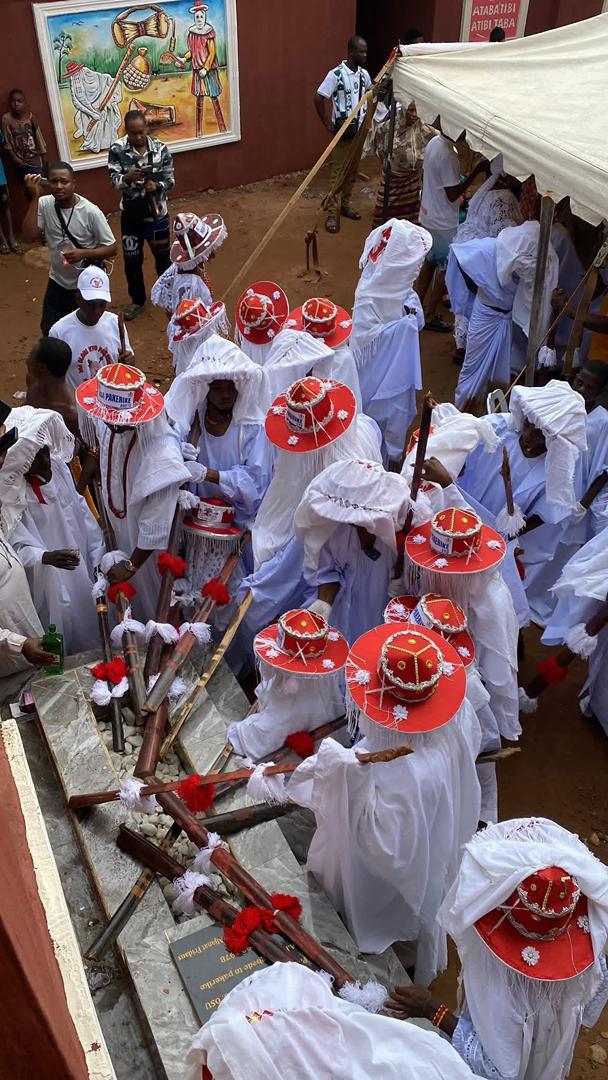
Across Nigeria, few cultural spectacles command the same visual power and public fascination as the Eyo Festival. With its flowing white robes, tall hats, symbolic staffs, disciplined processions and grand display through the streets of Lagos Island, Eyo has become one of the most recognized traditional festivals in West Africa. To many global visitors, Eyo is seen as the cultural face of Lagos.
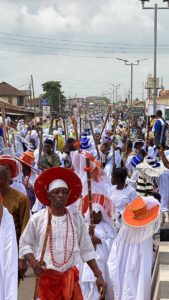
Yet behind the modern fame of the festival lies an older historical conversation. Oral traditions and historical references widely acknowledge that Iperu-Remo in present-day Ogun State holds deep ancestral links to the origins of Eyo. This makes the story of Eyo not only a Lagos story, but also a broader Yoruba heritage story shaped by migration, royal alliances, urban growth and cultural reinvention. 
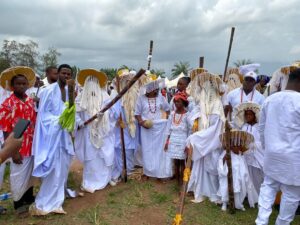
Iperu and the Early Roots of Eyo
Iperu, located in Remoland of Ogun State, is regarded in several historical accounts as an important cradle of the Eyo tradition. Traditions speak of early Eyo lineages and family compounds in Iperu where forms of the masquerade institution existed long before the festival became internationally known in Lagos.
Some accounts note that different Eyo houses or family branches were established in Iperu, each connected to royal and community structures. These traditions maintain that the Eyo institution was part of ceremonial life, social prestige and spiritual observance in the town.
 

Like many Yoruba cultural institutions, traditions often moved with people through marriage, trade, warfare, diplomacy and settlement. Culture was never fixed to one town alone. It travelled with families and adapted to new environments.
How Lagos Adopted and Elevated Eyo
Lagos, historically a coastal commercial kingdom and later a colonial port city, became one of the most important urban centers in West Africa. As people from different Yoruba subgroups settled in Lagos over centuries, customs from outside communities blended with local Isale Eko traditions.
Historical references state that Eyo was introduced into Lagos through relationships linked to Iperu and other Yoruba networks. Over time, Lagos indigenes restructured the festival within their own royal and social systems. What began as a transferred tradition became a distinct Lagos institution. 
This is not unusual in African history. Cities often absorb traditions and then redefine them through scale, symbolism and political importance.
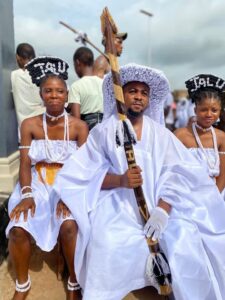
Why Lagos Made It Bigger
Lagos did not merely adopt Eyo. It transformed it.
Several factors explain why the festival became larger and more visible in Lagos:
1. Lagos Became a Major Urban Capital
As Lagos grew into Nigeria’s commercial nerve center, any cultural event staged there naturally gained wider attention. Media, diplomacy, business elites and visitors amplified its visibility.
2. Strong Royal Symbolism
In Lagos, Eyo became deeply associated with the passing of kings, installation rites, high chiefs and major state occasions. This elevated the festival beyond entertainment into civic heritage. 
3. Public Spectacle and Tourism Appeal
The white costumes, synchronized movement, street takeover and ceremonial pageantry make Eyo highly photogenic and unforgettable. It became a natural tourism asset.
4. Government Recognition
Modern administrations in Lagos recognized Eyo as a brandable cultural product capable of attracting visitors, promoting identity and strengthening heritage tourism.

Does Lagos Ownership Erase Iperu Origins?
Not at all.
Culture can have an origin point and still flourish elsewhere. Both truths can exist together.
Iperu may be honored as a historical source of the Eyo tradition, while Lagos can rightly be acknowledged as the city that institutionalized, expanded and globalized it. One represents ancestry. The other represents scale and continuity.
This shared heritage model is common across the world. Dishes, dances, religions and festivals often begin in one place and achieve their greatest prominence in another.
The Tourism Opportunity for Iperu
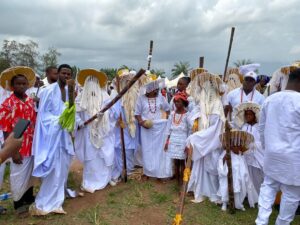
The current Eyo celebration in Iperu presents an important opportunity for Ogun State tourism. If properly documented, branded and promoted, Iperu can position itself as the ancestral home of Eyo and offer visitors a heritage experience distinct from Lagos.
Possible tourism assets include:
* Annual heritage festivals
* Cultural museums and archives
* Traditional costume exhibitions
* Storytelling tours on Eyo migration history
* Culinary festivals featuring Remo cuisine
* Hospitality partnerships with hotels and resorts
* Diaspora cultural homecoming events
This would create a two-destination tourism circuit:
Iperu for roots and history
Lagos for spectacle and global visibility
A Shared Yoruba Legacy
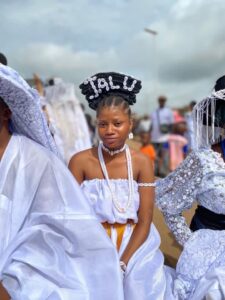
Rather than rivalry, the Eyo story should inspire collaboration between Ogun and Lagos States. Joint tourism campaigns, cultural research, heritage festivals and academic documentation can enrich both regions.
The Eyo Festival is proof that Yoruba culture is dynamic, mobile and enduring. It reminds us that traditions can travel, evolve and become greater without forgetting where they came from.
Final Reflection
When the white-robed Eyo walks through Lagos, the world watches.
When Eyo rises in Iperu, history speaks.
Both matter.
One city gave it a global stage.
One town kept the memory of its roots.
That is not contradiction. That is heritage.