

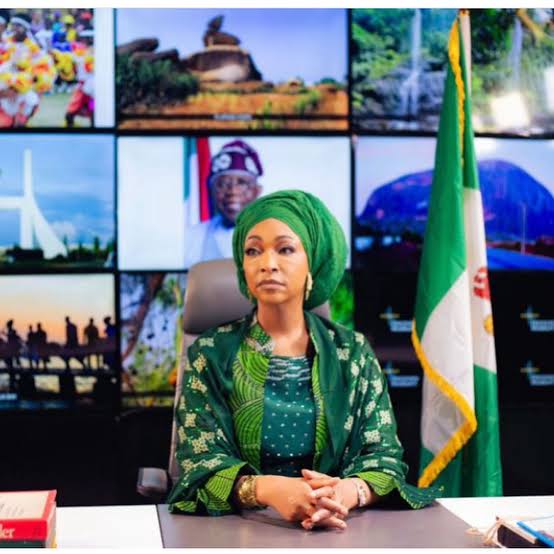
Nigeria’s Minister of Art, Culture, Tourism and the Creative Economy, Barrister Hannatu Musa Musawa, has stressed that urgent improvement in infrastructure, particularly world-class facilities for major entertainment and cultural events, is essential to realising the nation’s ambitious goal of generating $100 billion in GDP contribution from the creative and tourism sectors by 2030. 
The Minister highlighted that the country is currently forfeiting significant economic value due to inadequate venues and supporting infrastructure capable of hosting large-scale international and domestic events. Despite Nigeria’s abundant talent and global influence in music, film (Nollywood), fashion, and arts — often showcased during high-energy periods like Lagos’ “Dirty December” — the absence of modern arenas, studios, cultural hubs, and related facilities limits scalability, investment attraction, and revenue capture. 
Speaking on multiple occasions, including engagements with lawmakers, governors, and stakeholders, Musawa has consistently positioned infrastructure as the foundation for the sector’s growth. The Federal Government aims for the creative economy — encompassing 49 segments from entertainment and music to heritage and tourism — to contribute substantially to national GDP while creating millions of jobs, particularly for youth. 
Key initiatives include the establishment of the Creative and Tourism Infrastructure Corporation (CTICo), approved by the Federal Executive Council under a public-private partnership (PPP) model. This special purpose vehicle seeks to bridge critical infrastructure gaps through targeted investments in projects such as:
• Abuja Creative City
• Upgraded national arenas with expanded capacity
• Film studios and digital distribution networks
• Heritage sites, museums, and creative hubs
The Ministry has identified substantial funding needs, including around ₦100 billion each for repositioning tourism and advancing the creative segment, alongside partnerships like €100 million from the French Treasury. 
“By bridging the infrastructure gap… this value can only be really extracted… if we put the modalities in place that allow its growth,” the Minister has emphasised, noting the sector’s vast untapped potential amid Nigeria’s rich creative output. 
This push aligns with President Bola Tinubu’s Renewed Hope Agenda to diversify the economy, leverage soft power, and position Nigeria as a global hub for culture and creativity. Governors have thrown their weight behind the roadmap, which also targets over 2–3 million new jobs. 
Industry observers note that addressing these deficits — from reliable power and large-capacity venues to production facilities — will not only stem economic leakage but enable Nigeria to fully monetise its position as a creative powerhouse on the African continent and beyond.